
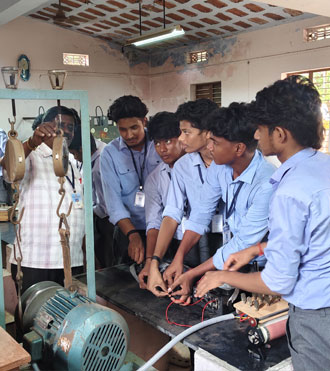
โšก Diploma in Electrical and Electronics Engineering

This program blends electrical principles with electronic systems. Students explore power generation, electrical machines, circuit design, and control systems, preparing them for roles in energy and industrial automation sectors.

โš™๏ธ About the Department

The Department of Electrical and Electronics Engineering (EEE) at KNSKPT aims to produce competent professionals who can contribute effectively to the fields of electrical systems, electronics, automation, and energy technologies. The department blends academic rigor with hands-on experience to build a strong foundation in electrical theory, power systems, and digital electronics.
With a qualified faculty team, modern laboratories, and an industry-relevant curriculum, the department provides an excellent platform for students to develop both technical and soft skills essential for successful careers.

๐Ÿ“š About the Curriculum and Course

The Diploma in Electrical and Electronics Engineering is a 3-year program (6 semesters), approved by AICTE and affiliated to DOTE, Tamil Nadu. It is designed to keep pace with evolving technologies in power generation, electrical machinery, control systems, and electronics.

Key subjects include:

  Electrical Machines
  Electrical Circuits and Networks
  Power Generation, Transmission & Distribution
  Digital Electronics
  Power Electronics & Drives
  Electrical Estimation and Wiring
  Instrumentation and Control Systems
  Programmable Logic Controllers (PLC)
  Microcontroller Applications
  Project Work and Industrial Exposure

The course emphasizes application-based learning and system-level understanding of electrical and electronic systems.

๐ŸŽ“ Eligibility Criteria

  Regular Admission: SSLC / 10th pass from a recognized board.
  Lateral Entry: Eligible for those who have completed +2 or ITI

๐Ÿงช About the Laboratories

The department boasts fully functional and advanced laboratories, providing real-time exposure to electrical and electronic systems.

Main lab facilities include:

  Electrical Machines Lab โ€“ AC/DC machines, transformers, generators, and motor setups for testing and performance studies.
  Power Electronics Lab โ€“ Diodes, SCRs, converters, inverters, and chopper circuits for real-time simulation.
  Control Systems & PLC Lab โ€“ Automation kits, PID controllers, PLC programming stations.
  Wiring & Electrical Workshop โ€“ Domestic and industrial wiring, fault diagnosis, switchgear practices.
  Electronics Lab โ€“ Breadboard prototyping, digital/analog circuit design, and testing.

Labs adhere to AICTE standards, offering students a well-rounded practical education.

๐Ÿš€ Career Opportunities

Graduates of the EEE program are in high demand across various sectors, especially in power, manufacturing, automation, and infrastructure industries.

Job roles include:
  Electrical Maintenance Engineer
  Junior Engineer (TNEB, Railways, PWD, etc.)
  Control Panel Technician
  PLC Programmer
  Power Plant Technician
  Electrical Designer/Draftsman (AutoCAD Electrical)
  Electrician Supervisor (Licensed)
  Technical Support Executive
Employment Sectors:
  Power Generation & Distribution Companies
  Electrical Equipment Manufacturing
  Renewable Energy Projects
  Automation & Instrumentation Industries
  Government Departments (EB, Metro Rail, DRDO, ISRO)

Graduates may also pursue B.E./B.Tech in Electrical/Electronics Engineering via lateral entry for higher education.